
AQUACULTURE EUROPE 2026 · COMMUNICATING SCIENCE · LJUBLJANA, 30 SEPTEMBER 2026
Beyond the Buzz
How science creates strategic value for stakeholders at industry trade fairs
56 %
of visitors gained new knowledge they expect to use at work
7.7 %
of it came from researchers' talks
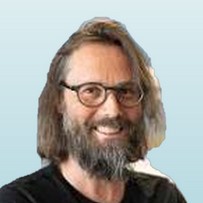
Vidar Onarheim
Aqkva / HavExpo / Global Aqua (Norway)
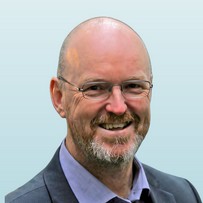
Peter S. Christensen
Expogenius (Denmark)
The talk in one minute
Trade fairs gather the people who decide – farm managers, buyers, suppliers – within a few metres of each other. Yet research rarely reaches them there. At HavExpo 2026, most new knowledge came from exhibitors and conversations, not from the stage.
The problem is not that research lacks value. It is that expert knowledge is not automatically usable knowledge: precision has to be translated into a decision someone can make. Exhibitors and visitors come for business value – not for research. Give them the decision your research makes easier, and they will listen to both.
Slides
The nine slides from the session, without speaker notes.
Download the slides (PDF, 9 slides)Tasks First: what, whom, when – then how
Most of us start with HOW – the slides, the abstract, the format. Start with WHAT and WHOM, and HOW becomes obvious.
WHAT
Which decision or task does my research change?
Whether to move to mechanical delousing this autumn.
WHOM
Who makes that decision – by role, not by sector?
Production manager, mid-size salmon farm, Scotland.
WHEN
Before, during or after the fair – and where do they already stand?
At the equipment stands on Wednesday morning.
HOW
Only now: format, message, follow-up.
Five minutes at the stand + one dated follow-up.
At the stand: three questions, one offer
- 1
"Which decision are you – or your customers – struggling with this season?" Their task, not your topic. Listen for: buy, switch, scale, stop, wait.
- 2
"What would you need proven before you decide – that nobody can prove yet?" This is the door. If they have an answer, move on. If they don't – that gap is your research.
- 3
"Who decides that in your company – and who follows up with me after today?" Two names. Write both down, with a date.
Write it down – before and after
Before (30 seconds)
Which decision could my research change? · Who decides? (e.g. production manager at a mid-size farm – not "the salmon industry")
After (before you walk away)
Who follows up on their side – by name? · What will I send them, and by which date?
Do
- Open with their decision, not your paper.
- Present what you have – end with what they can do on Monday.
- Leave with a name and a date.
Don't
- Ask for a project or funding on day one.
- End with "more research is needed".
- Wait for the hall to fill. The floor is the room.
At a stand, ask about their customers' decision. In the aisle with a farmer or buyer, ask about their own. Same questions, same offer.
Written "when X, then Y" plans raise goal attainment across 94 studies (Gollwitzer & Sheeran 2006). One meeting alone changes professional practice only modestly (Forsetlund et al. 2021, Cochrane) – hence one action, not a transformation.
What the data points to
Where visitors say their new knowledge came from
| Source | Share of answers |
|---|---|
| Exhibitors | 61.1 % |
| Conversations with other visitors | 16.8 % |
| Talks by researchers / experts | 7.7 % |
| Talks by industry | 7.7 % |
| Other | 3.7 % |
| Demonstrations | 2.0 % |
| Start-ups | 0.7 % |
| Organizer guides | 0.3 % |
It works – even in an empty room
More than half of the speakers who answered got concrete industry inquiries after their talk.
"Got good and concrete inquiries from customers, research and press afterwards."
"Everything would have been fine if there had been people."
Same place, same audience.
What visitors came for
- 72 % of visitors got what they came for – new technology and relationships.
- 53 % of exhibitors say visitors did not ask for research or evidence behind products.
Visitors are not looking for research. They are looking for a decision they can make. Research is demanded the moment it is translated into that decision.
About the data
HavExpo 2026 (Bergen, Norway, May 2026). Separate surveys of visitors, exhibitors and speakers, linked to registration data. Results are indicative, not a representative scientific study.
What the research says
- People decide with peers. In a study of farmers' knowledge networks, scientists made up 6.4 % of knowledge contacts; fellow farmers 50 % (Wood et al. 2014).
- Farm decisions run on own data and peer exchange. Fish-health and welfare decisions on salmon farms rely on own data, private fish-health services and farm-to-farm exchange (Zhou et al. 2025).
- Trade fairs transfer knowledge through interaction. Trade-fair research places knowledge transfer in stand conversations, observation and "buzz" – not lectures (Bathelt 2019; Yi & Jiang 2025).
- Face-to-face creates collaboration. When a large conference was cancelled, subsequent co-authorship among registered participants fell by about 18 % (Campos, de Leon & McQuillin 2018).
- Usable knowledge is made with the user. The most cited barrier to using evidence is research that is not relevant or timely; the strongest facilitator is collaboration and relationships (Oliver et al. 2014).
What it means for trade fairs
- 1. Researchers on the floor – not next door. Hannover Messe 2026 gives research its own hall: Fraunhofer, DLR, KIT and TU Berlin exhibit alongside industry (Research & Technology Transfer, Hall 11).
- 2. Short talks where the traffic is. Aquaculture UK 2026 runs its Innovation Theatre in the main exhibition space: research and technology for commercial aquaculture, free to attend. Open floor stages are among the best-attended on-floor formats ( CEIR).
- 3. Match the meeting – and measure it. The right decision-maker in front of the right researcher. Then count: attendance per talk, inquiries per researcher, and what was done afterwards.
Global Aqua · Oslo · September 2027
We see a large potential in making trade fairs better at connecting research, companies and the people who make practical decisions. At Global Aqua we will keep working on that – so relevant knowledge does not stop at the stage, but gets used in practice.
Want to be on the floor in Oslo? Contact Vidar Onarheim.
Speakers
Vidar Onarheim
Founder & CEO, Aqkva / HavExpo / Global Aqua (Norway)
Fish farmer, planner and organizer of 60 conferences and 3 exhibitions. E-mail: vidar@globalaqua.no
Peter S. Christensen
Founder, Expogenius (Denmark)
Trade-fair data and AI, supported by Innovation Fund Denmark. E-mail: peter@expogenius.com
Session: Communicating Science · chair Reidun Lilleholt Kraugerud (Nofima) · Wednesday 30 September 2026, 15:00 · Aquaculture Europe 2026, Ljubljana, organised by the European Aquaculture Society.
References
- Bathelt, H. (2019). Theorizing temporary proximity, temporary clusters and temporary markets. SPACES online 15, 2019-01. https://www.spaces-online.com/include/SPACES_2019-01%20Bathelt.pdf
- Campos, R., de Leon, F.L.L. & McQuillin, B. (2018). Lost in the storm: The academic collaborations that went missing in Hurricane Isaac. The Economic Journal 128(610), 995–1018.
- CEIR – Center for Exhibition Industry Research. Attendee Floor Engagement report series. https://www.iaee.com/ceir/maximizing-attendee-and-exhibitor-engagement-on-the-exhibition-floor/
- Forsetlund, L. et al. (2021). Continuing education meetings and workshops: effects on professional practice and healthcare outcomes. Cochrane Database of Systematic Reviews, CD003030.pub3. https://doi.org/10.1002/14651858.CD003030.pub3
- Gollwitzer, P.M. & Sheeran, P. (2006). Implementation intentions and goal achievement: A meta-analysis of effects and processes. Advances in Experimental Social Psychology 38, 69–119.
- Hannover Messe (2026). Where research and manufacturing meet (press release). https://www.hannovermesse.de/en/press/press-releases/hannover-messe/hannover-messe-where-research-and-manufacturing-meet-2
- Oliver, K. et al. (2014). A systematic review of barriers to and facilitators of the use of evidence by policymakers. BMC Health Services Research 14:2.
- We Are Aquaculture (15 May 2026). Aquaculture UK unveils Innovation Theatre programme. https://weareaquaculture.com/news/aquaculture/aquaculture-uk-unveils-innovation-theatre-programme
- Wood, B.A. et al. (2014). Agricultural science in the wild: A social network analysis of farmer knowledge exchange. PLOS ONE 9(8), e105203. https://doi.org/10.1371/journal.pone.0105203
- Yi, W. & Jiang, X. (2025). Temporary clusters, knowledge transfer, and corporate innovation. SAGE Open. https://doi.org/10.1177/21582440251390980
- Zhou, X. et al. (2025). The use of data for health and welfare management of farmed salmon in Norway, Scotland and Ireland. Preventive Veterinary Medicine.